The Minimalist Advantage
The core philosophy of calisthenics is reliance on the body rather than complex machinery. However, to execute a full range of pulling and pushing movements, a few select pieces of equipment are highly recommended. These tools expand your exercise selection and protect joint health.
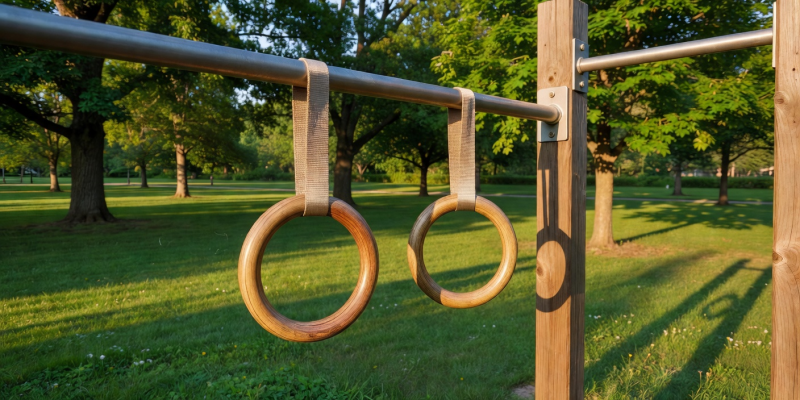
Gymnastics Rings
If you can only own one piece of equipment, make it a set of gymnastics rings. Rings are freely moving suspension tools that require intense stabilizer muscle recruitment. A ring dip is significantly harder than a parallel bar dip because you must prevent the rings from moving outward.
| Material | Grip Diameter | Pros | Cons |
|---|---|---|---|
| Wood | 28mm (FIG spec) | Excellent chalk absorption, natural feel, best grip | Can warp if left out in the rain |
| Wood | 32mm (Thick) | More comfortable for pushing exercises | Harder for false grip |
| Plastic | 28mm | Weatherproof, highly durable, cheap | Slippery when sweating, requires heavy chalk |
Ensure your rings come with numbered nylon straps and heavy-duty cam buckles for quick, even adjustments.
Parallettes
Parallettes are parallel bars ranging from 10cm to 30cm off the ground. They are vital for wrist health during pressing movements like the planche, handstand push-ups, and L-sits. Pushing flat on the floor forces the wrist into severe extension (90 degrees or more), which can cause inflammation over time. Parallettes allow for a neutral wrist alignment.
Pull-Up Bars
A reliable pull-up bar is mandatory. Options range from doorway friction-fit bars to wall-mounted systems and freestanding outdoor rigs. For serious calisthenics (especially explosive movements like muscle-ups or freestyle dynamic moves), a heavily bolted outdoor bar or a robust freestanding rack is required, as doorway bars cannot handle extreme lateral forces.
Resistance Bands
Long loop resistance bands are the calisthenics equivalent of changing weight plates. They are used in two primary ways:
- Assistance: Wrapping a band around the bar and your feet to de-load your bodyweight for pull-ups, front levers, or planche leans.
- Resistance: Adding bands to push-ups or squats to increase the difficulty when bodyweight alone is no longer challenging enough.
Chalk
Magnesium carbonate (chalk) is crucial for a safe, secure grip, particularly when practicing the false grip for muscle-ups. Liquid chalk is often preferred for indoor training as it creates zero dust.